Flood Zone VE: Coastal High-Hazard Zone with Base Flood Elevations
Flood Zone VE is the most precisely mapped coastal high-hazard flood zone designation. The "V" indicates velocity (wave action), and the "E" indicates that FEMA has established Base Flood Elevations (BFEs) through detailed coastal engineering studies.
What Is Flood Zone VE?

Zone VE designates coastal areas subject to inundation by the 1% annual chance flood with additional hazards from storm-induced wave action of 3 feet or more. It represents the same risk as Zone V but with the critical addition of detailed elevation data.
Key Characteristics
- Flood type: Storm surge + wave action (3+ foot waves)
- BFE established: Yes — this is the key distinction from Zone V
- Risk level: Very high (highest-risk flood zone designation)
- Insurance required: Yes
- SFHA designation: Yes
- Construction: Most stringent standards apply
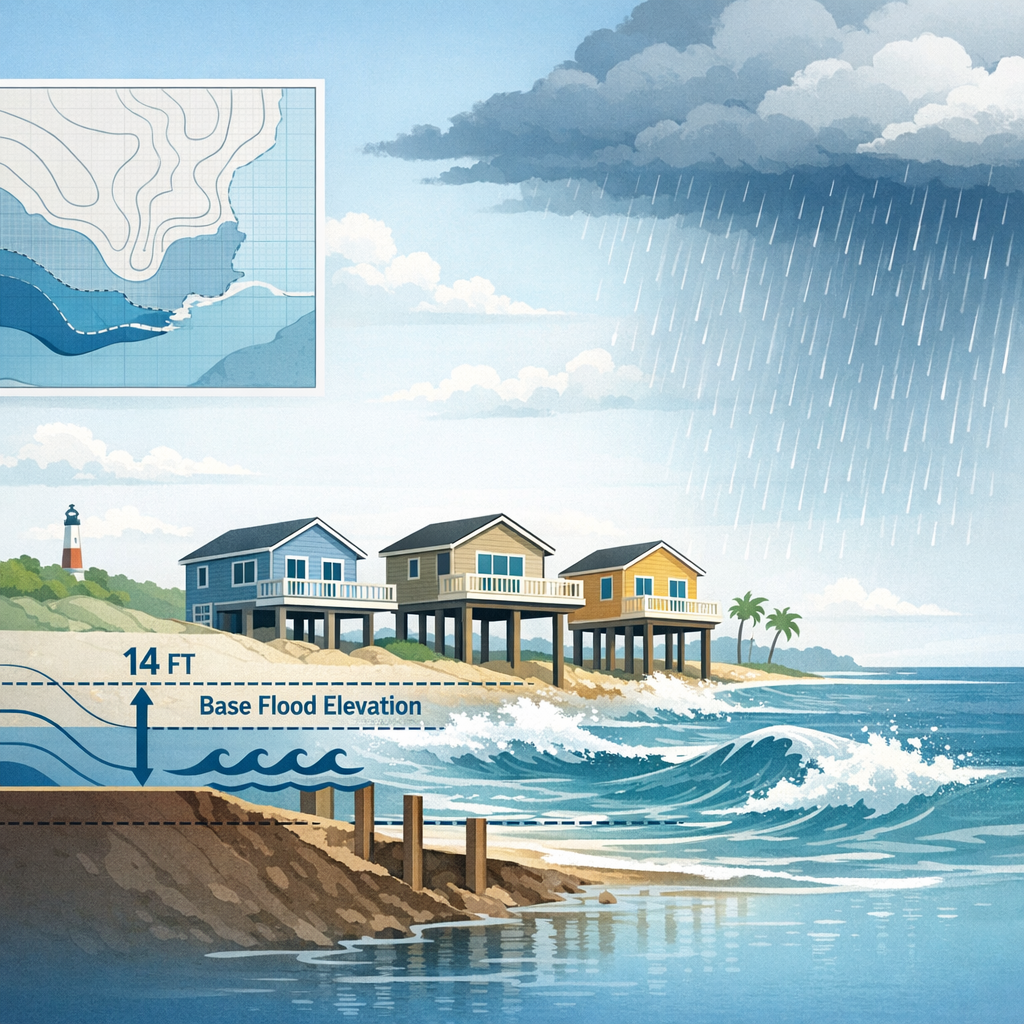
The BFE in Zone VE
The Base Flood Elevation in Zone VE includes both the stillwater flood elevation (storm surge) and the wave crest elevation. This makes VE BFEs significantly higher than what you might see in inland Zone AE areas.
For example:
- Storm surge may reach 12 feet above sea level
- Waves may add another 5-8 feet above the surge
- The BFE could be set at 17-20 feet above sea level
This means buildings in Zone VE must be elevated to extraordinary heights compared to inland flood zones.
The Coastal A Zone: A Related Concept
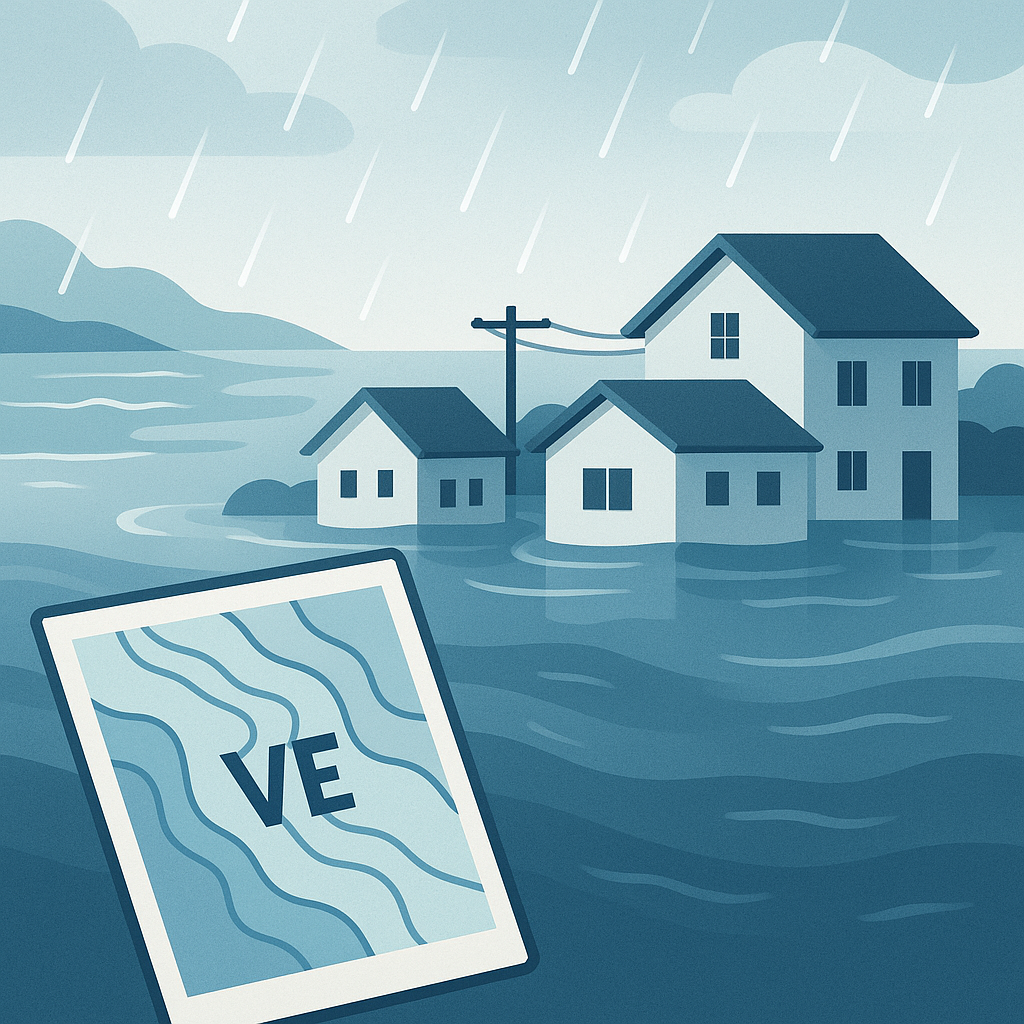
Between the VE zone and the inland AE zone, there's often a transitional area where waves are between 1.5 and 3 feet high. While FEMA maps this area as Zone AE, it's often referred to informally as the Coastal A Zone (or CAZ).
The Coastal A Zone is important because:
- It has wave action, just not as severe as VE
- Many communities apply VE-like construction standards in the Coastal A Zone
- ASCE 24 (the flood-resistant design standard) requires V-zone construction methods in the Coastal A Zone
- Insurance may not fully reflect the wave action risk
Construction Requirements
Zone VE has the most stringent construction requirements of any flood zone — identical to Zone V but with specific BFE-based elevation standards:

Foundation Requirements
- Only open foundations (pilings, piles, posts, columns) are permitted
- Slab-on-grade, crawlspace, and solid wall foundations are prohibited
- Foundation design must account for:
- Wave forces (breaking and non-breaking)
- Erosion and scour (soil removal around pilings)
- Debris impact
- Combined wind and flood loads
Elevation Standard
The bottom of the lowest horizontal structural member of the lowest floor must be at or above the BFE. This is a stricter standard than Zone AE, where the top of the lowest floor must meet BFE.
The difference matters:
- Zone AE: Floor surface at or above BFE
- Zone VE: Bottom of floor joists/beams at or above BFE
This means a Zone VE building must be elevated approximately 1-2 feet higher than the same BFE would require in Zone AE.
Breakaway Walls
Enclosed areas below BFE must use breakaway walls designed to collapse under flood forces (minimum 10 psf, maximum 20 psf) without damaging the elevated structure or foundation. These spaces can only be used for:
- Parking
- Building access (stairs, elevators)
- Storage
Engineering Certification
A registered professional engineer must certify:
- The pile/column embedment depth is sufficient (accounting for erosion)
- The structure can withstand combined flood, wave, and wind forces
- Breakaway walls are properly designed
- All connections meet required load capacities
Insurance Costs in Zone VE
Zone VE properties face the highest flood insurance premiums of any zone designation:
NFIP Premium Ranges
| Building Condition | Approximate Annual Premium |
|---|---|
| Properly elevated above BFE | $1,500 – $5,000 |
| At BFE | $3,000 – $8,000 |
| Below BFE | $8,000 – $25,000+ |
| Non-compliant structure | $10,000 – $30,000+ |
Factors Affecting Premiums
Under Risk Rating 2.0:
- Elevation relative to BFE remains the primary factor
- Distance to coast significantly affects rates
- Building type and construction influence premiums
- Historical claims impact pricing
- Replacement cost determines maximum exposure
Private Insurance Options
Given the high cost of NFIP policies in Zone VE, private flood insurance is worth exploring. Some private insurers:
- Use different risk models that may result in lower premiums
- Offer higher coverage limits
- Provide additional coverages not available through NFIP
- May offer lower rates for well-elevated, well-constructed properties
However, private flood insurance in Zone VE can also be expensive, and some private insurers avoid the highest-risk coastal areas entirely.
Long-Term Considerations
Sea-Level Rise
Zone VE areas are particularly vulnerable to sea-level rise, which:
- Increases storm surge heights
- Pushes wave action further inland
- Accelerates coastal erosion
- May cause FEMA to expand VE zone boundaries on future map updates
Current projections suggest 1-4+ feet of sea-level rise by 2100 depending on emissions scenarios. Coastal properties face increasing risk over time.
Erosion
Coastal erosion rates vary widely but can range from 1-10+ feet per year depending on location, geology, and storm history. Over a 30-year mortgage:
- 2 ft/year erosion = 60 feet of shoreline loss
- 5 ft/year erosion = 150 feet of shoreline loss
Properties near eroding shorelines face the risk of literally losing ground.
Insurance Affordability
As Risk Rating 2.0 continues to phase in actuarially sound rates, Zone VE premiums are expected to continue increasing for many properties. Congress has capped annual increases at 18% per year for existing NFIP policies, but this still means significant cost growth over time.
Mitigation Options
Elevation
Elevating an existing structure higher above BFE is the most effective mitigation measure in Zone VE. This can reduce insurance premiums by thousands of dollars per year. However, re-elevation of existing buildings is expensive — typically $100,000-$300,000+ depending on the structure and site conditions.
Foundation Strengthening
For buildings on older pile foundations, upgrading connections, adding sister piles, or reinforcing the foundation system can improve storm resistance and may favorably affect insurance ratings.
Managed Retreat
In the most vulnerable Zone VE areas, some communities are pursuing managed retreat — purchasing at-risk properties and returning the land to natural coastal buffers. FEMA's Hazard Mitigation Grant Program and Flood Mitigation Assistance program can fund voluntary buyouts.
For Coastal Market Professionals
Agents
Zone VE properties require transparent disclosure of both the flood risk and the financial implications. Build insurance cost estimates into your property presentations.
Lenders
Verify that flood insurance policies in Zone VE specifically cover the structure's exposure, including wave action. Ensure coverage meets the higher replacement costs typical of elevated coastal construction.
Title Companies
Coastal closings in Zone VE can be complex. Start the flood determination and insurance process as early as possible to avoid delays.
Coastal Flood Determinations in Seconds
Zone VE properties require the same certified flood determination as any other zone — but the stakes are higher. FloodCert.org delivers instant results with complete BFE data so you can advise clients accurately.