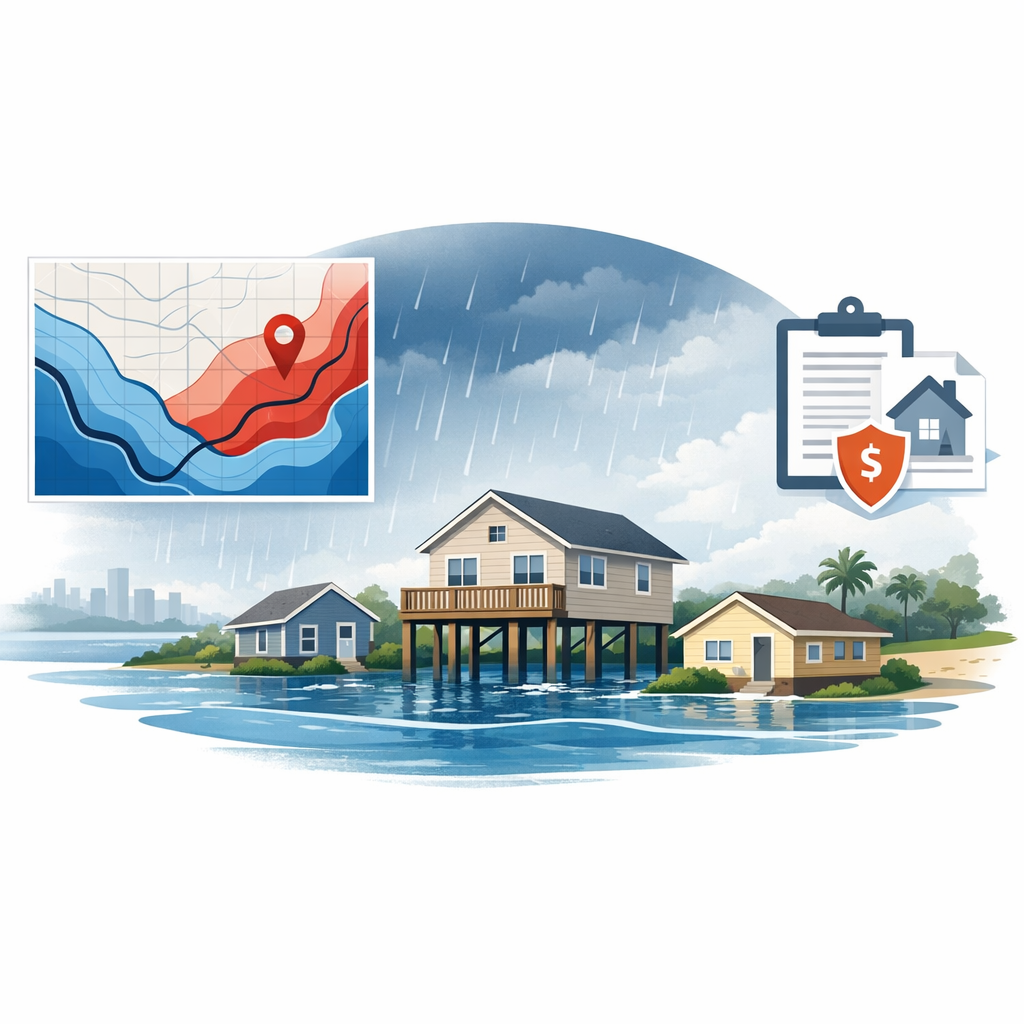
FEMA Flood Zone AE Explained: What It Means for Your Property and Mortgage
Flood Zone AE is the most commonly encountered Special Flood Hazard Area (SFHA) designation on FEMA's Flood Insurance Rate Maps. If you've been told that a property falls in Zone AE, here's everything you need to know — from what it means to what it costs and what you can do about it.
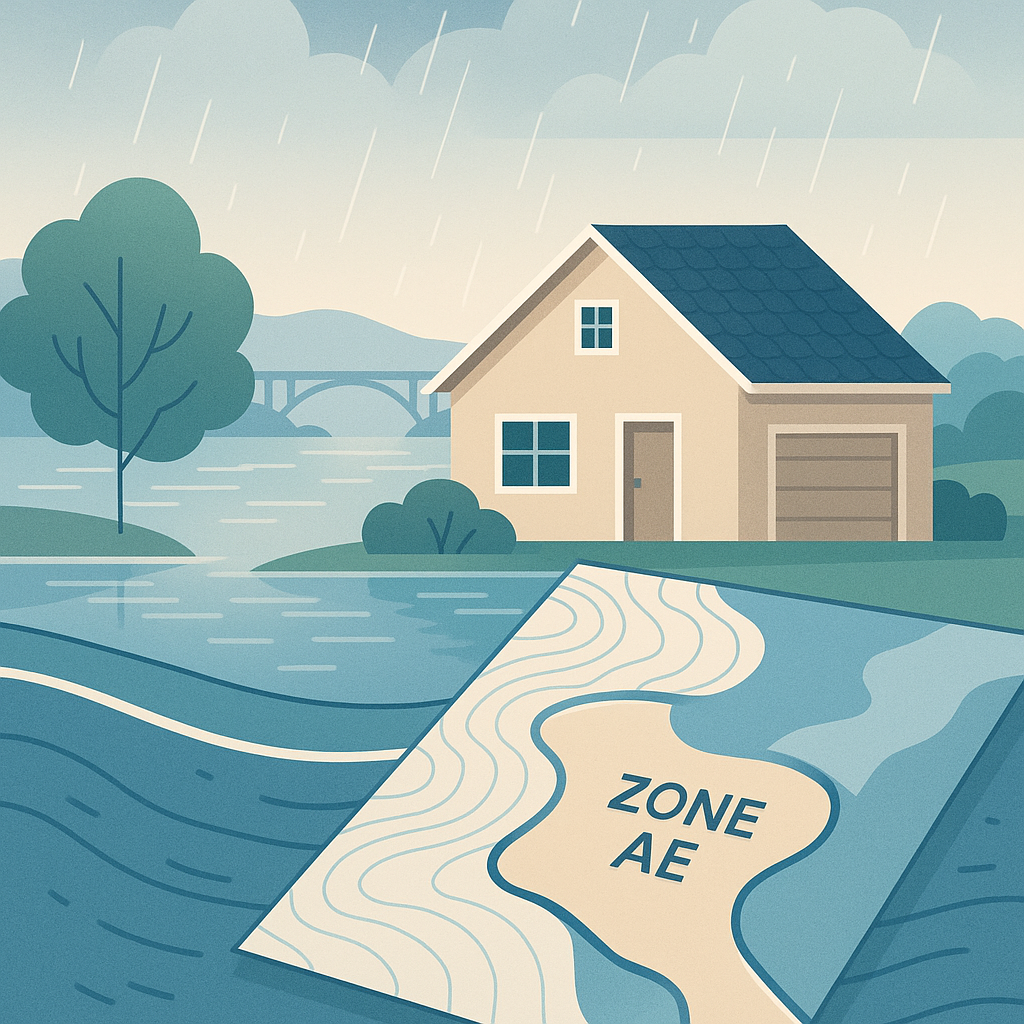
Flood Zone AE is the most commonly encountered Special Flood Hazard Area

---
What Is Flood Zone AE?

## What Is Flood Zone AE
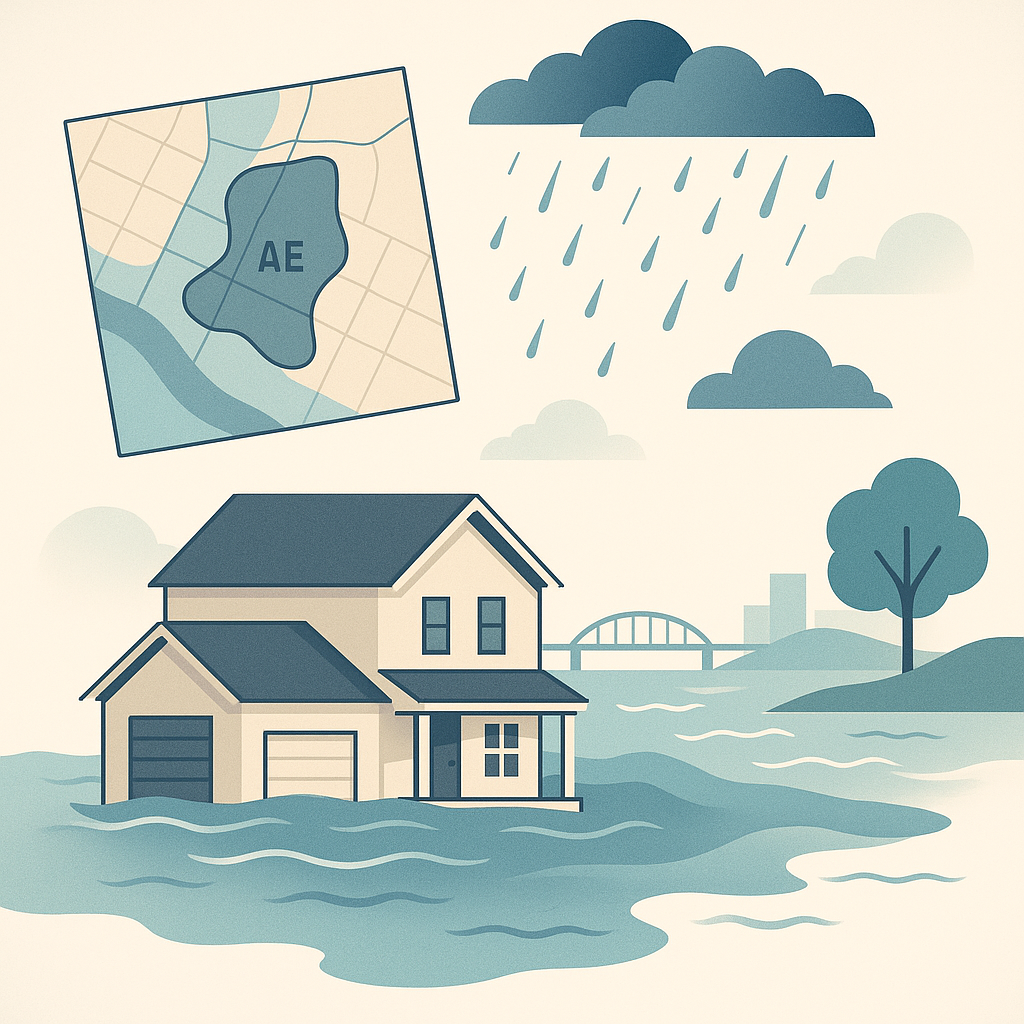
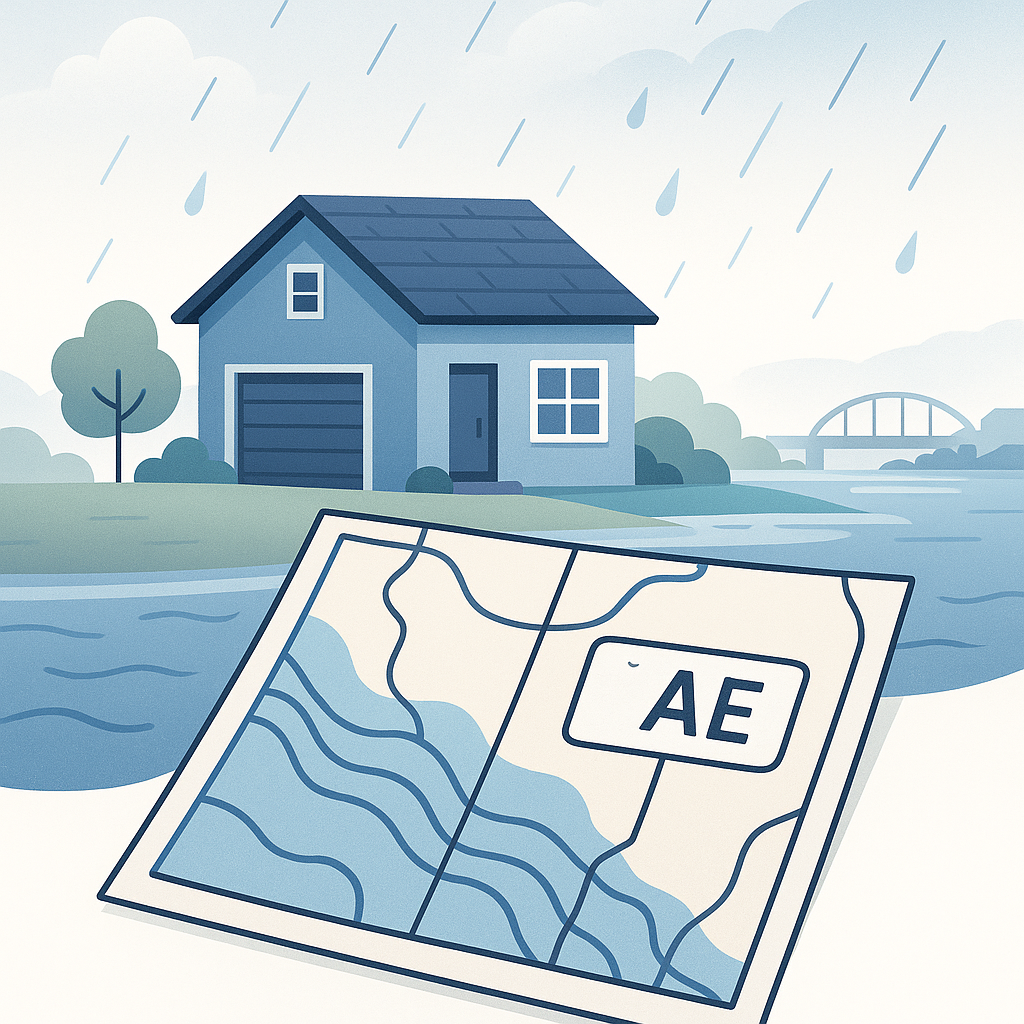
Flood Zone AE is a high-risk flood area where FEMA has determined there is a 1% or greater annual chance of flooding — what's commonly referred to as the "100-year floodplain." The "E" in AE stands for "elevation," indicating that FEMA has conducted detailed engineering studies and established Base Flood Elevations (BFEs) for the area.
The BFE is the computed elevation to which floodwater is anticipated to rise during the 1% annual chance flood event. It is expressed in feet above a standard reference datum (typically NAVD 88) and serves as the regulatory standard for:
- Floodplain management
- Building codes and construction standards
- Flood insurance rating
Zone AE replaced the older Zone A1-A30 designations, which served the same purpose but used numbered suffixes instead of BFE data directly on the map.
How Zone AE Differs from Other A Zones
Understanding the distinctions between different A-zone variants helps clarify where AE fits:
| Zone | Risk Level | BFE Determined? | Flooding Type |
|---|---|---|---|
| A | High (1% annual chance) | No | Riverine/general |
| AE | High (1% annual chance) | Yes | Riverine/general |
| AH | High (1% annual chance) | Yes | Shallow ponding (1-3 ft) |
| AO | High (1% annual chance) | No (flood depths given) | Sheet flow (1-3 ft) |
| AR | High (temporary) | Varies | Levee restoration areas |
Zone AE provides the most detailed flood risk data of any A zone because it includes specific BFE values. This makes it both the most precisely mapped and the most actionable for property owners, builders, and lenders.
What the Base Flood Elevation (BFE) Means
The BFE is the single most important number on a flood map for Zone AE properties. Here's why:

For Construction
Local building codes in Zone AE typically require that the lowest floor of a new structure (including the basement) be built at or above the BFE. Many communities require an additional margin — often 1 to 2 feet above BFE — known as freeboard.
For example, if the BFE is 25 feet and the community requires 1 foot of freeboard, the lowest floor must be at or above 26 feet.
For Flood Insurance Pricing
Under both the traditional NFIP rating system and the newer Risk Rating 2.0 methodology, the relationship between a building's lowest floor elevation and the BFE is a primary driver of insurance premiums.
- Building above BFE = significantly lower premiums
- Building at BFE = moderate premiums
- Building below BFE = substantially higher premiums
Each foot below BFE can increase annual premiums by hundreds or even thousands of dollars. Conversely, each foot above BFE provides meaningful savings.
For Property Valuation
A property's elevation relative to BFE affects its long-term cost of ownership and, consequently, its market value. Properties elevated well above BFE in Zone AE may be more marketable than those at or below BFE.
Insurance Requirements in Zone AE
Mandatory Purchase Requirement
If a property in Zone AE secures a federally backed mortgage (conventional loans from federally regulated lenders, FHA, VA, USDA, etc.), the borrower is required by law to purchase and maintain flood insurance.
This requirement applies for the entire life of the loan — not just at closing.
Insurance Coverage Limits
Through the National Flood Insurance Program (NFIP):
- Residential properties: Up to $250,000 for the building and $100,000 for contents
- Commercial properties: Up to $500,000 for the building and $500,000 for contents
For properties requiring higher limits, excess flood insurance is available through private insurers.
What Does Flood Insurance Cost in Zone AE?
Costs vary significantly based on the property's specific characteristics under Risk Rating 2.0, but here are general ranges:
- Elevated above BFE: $500 – $1,500/year for a typical residential property
- At BFE: $1,000 – $3,000/year
- Below BFE: $2,000 – $10,000+/year
- Severe repetitive loss properties: Can exceed $10,000/year
These are rough ranges. Actual premiums depend on factors including distance to water, flood type, building characteristics, and claims history.
Impact on Mortgage Lending
For mortgage lenders, Zone AE triggers several compliance obligations:
1. Flood Determination
A certified Standard Flood Hazard Determination Form (SFHDF) must confirm the property's Zone AE status. This determination must be based on the current effective FEMA map.
2. Borrower Notification
The lender must provide the borrower with written notice that:
- The property is in an SFHA
- Flood insurance is required
- Federal disaster relief may not be available without flood insurance
3. Insurance Verification
Before closing, the lender must verify that:
- Flood insurance has been obtained
- Coverage meets minimum requirements (at least the lesser of the outstanding loan balance, maximum NFIP coverage, or the insurable value of the building)
- The policy is effective on or before the closing date
4. Ongoing Monitoring
Lenders must monitor flood insurance throughout the life of the loan. If a borrower lapses coverage, the lender must force-place flood insurance and charge the cost to the borrower.
Can You Get a Property Out of Zone AE?
In some cases, yes. FEMA provides formal processes to challenge or change a flood zone designation:
Letter of Map Amendment (LOMA)
If a property's natural ground elevation is at or above the BFE, you may qualify for a LOMA. This is the most common path for individual properties. Requirements include:
- An Elevation Certificate (EC) prepared by a licensed surveyor
- The property must be on natural high ground — not fill
- The lowest adjacent grade must be at or above the BFE
A successful LOMA removes the mandatory insurance requirement (though voluntary coverage is still recommended).
Letter of Map Revision Based on Fill (LOMR-F)
If the property has been elevated using engineered fill to or above the BFE, you may qualify for a LOMR-F. This requires:
- An Elevation Certificate
- Documentation that fill was properly placed and compacted
- Certification from a licensed professional engineer
Letter of Map Revision (LOMR)
For larger-area changes — such as new levees, channel improvements, or floodway modifications — a full LOMR may be appropriate. These are more complex and expensive, typically pursued by communities or developers rather than individual homeowners.
Practical Advice for Different Stakeholders
For Homeowners in Zone AE
- Get an Elevation Certificate — Know exactly where your property sits relative to the BFE. This is the foundation for everything else.
- Shop for insurance — Compare NFIP policies with private flood insurance. Private insurers may offer better rates for properties well above BFE.
- Consider a LOMA — If your property is naturally above BFE, a LOMA can save you thousands in insurance premiums.
- Protect your property — Even with insurance, consider flood-proofing measures: elevating utilities, installing backflow valves, and maintaining proper drainage.
For Mortgage Lenders
- Automate determinations — Manual flood determination processes create delays and errors. Use an automated platform like FloodCert.org for instant, accurate results.
- Track map changes — FEMA map revisions can change a property's zone designation, potentially triggering new insurance requirements or releasing existing ones.
- Train your team — Ensure loan officers understand Zone AE implications so they can proactively communicate with borrowers rather than surprising them at closing.
For Title Companies
- Order flood certs early — Don't let the flood determination be the last item holding up a closing. With FloodCert.org, you can get results instantly.
- Communicate proactively — If a property is in Zone AE, flag it early so the buyer can begin shopping for flood insurance immediately.
- Know the LOMA process — If a property has a LOMA on file, verify it's current and valid for the specific structure being insured.
For Real Estate Agents
- Check flood zones before listing or showing — Understanding a property's flood zone status helps you advise clients accurately and avoid surprises.
- Factor insurance costs into affordability — For Zone AE properties, flood insurance is a real cost that affects monthly payments. Help buyers budget accordingly.
- Highlight properties with LOMAs — A property that's been successfully removed from Zone AE via LOMA can be marketed as having lower flood risk and no mandatory insurance requirement.
Zone AE and New Construction
If you're building in Zone AE, construction must comply with both FEMA regulations and local floodplain management ordinances. Key requirements include:
- Lowest floor at or above BFE (plus any local freeboard requirement)
- Flood-resistant materials below BFE
- Proper anchoring to resist flotation, collapse, and lateral movement
- Flood openings (vents) in enclosed areas below BFE to allow water equalization
- No construction in the floodway that would increase BFE (with limited exceptions)
Non-compliance can result in higher insurance premiums, denial of permits, or legal liability.
The Future of Zone AE Mapping
FEMA's flood maps are not static. Several trends are affecting Zone AE designations:
- Updated engineering studies — As FEMA completes new Flood Insurance Studies, some areas are being added to or removed from Zone AE
- Climate considerations — Changing precipitation patterns and sea-level rise are expanding flood risk in many areas
- Development impacts — Upstream development increases runoff, potentially expanding downstream floodplains
- Risk Rating 2.0 — While RR 2.0 primarily affects insurance pricing rather than zone designations, it represents a shift toward more granular risk assessment
Staying current on FEMA map changes is essential for anyone with a financial interest in Zone AE properties.
Get Instant Zone AE Determinations with FloodCert.org
Don't let flood determinations slow down your transactions. FloodCert.org delivers certified flood zone determinations in seconds — including Zone AE properties with BFE data — so you can keep closings on track.