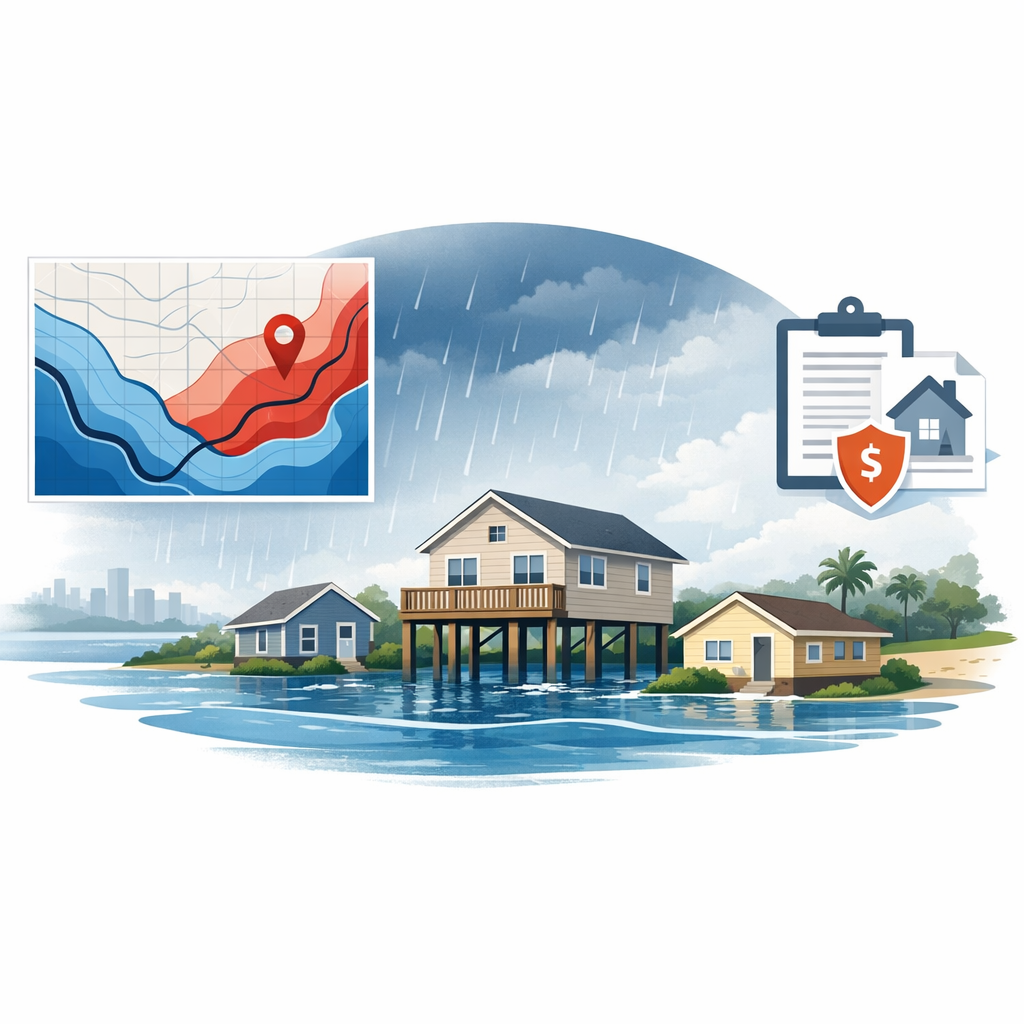
Flood Zone C: The Legacy Minimal-Risk Designation (Now Unshaded Zone X)
Flood Zone C is a legacy FEMA flood zone designation that has been replaced on all new and updated maps by Unshaded Zone X. If you encounter Zone C in property records or on older maps, it represents the lowest level of flood risk that FEMA identifies.
What Was Flood Zone C?
Zone C was FEMA's original designation for areas of minimal flood hazard — those lying outside both the 1% annual chance (100-year) and 0.2% annual chance (500-year) floodplains.
Key Characteristics
- Risk level: Minimal (less than 0.2% annual chance)
- SFHA designation: No
- Insurance required: No
- Current equivalent: Unshaded Zone X
- Status: Legacy — replaced on all new FEMA maps
Zone C = Unshaded Zone X
The transition from Zone C to Unshaded Zone X was purely a naming change as FEMA modernized its mapping system. The risk classification, insurance implications, and regulatory treatment are identical:
| Feature | Zone C (Legacy) | Unshaded Zone X (Current) |
|---|---|---|
| Risk level | Minimal | Minimal |
| SFHA | No | No |
| Insurance required | No | No |
| Insurance available | Yes | Yes |
| Construction restrictions | None (FEMA) | None (FEMA) |
Why Zone C Still Appears
You'll find Zone C referenced in:
- Older flood maps that haven't been updated
- Historical property documents and title records
- Older flood determinations completed when Zone C was the active designation
- Real estate descriptions and appraisals referencing historical zone data
If a current flood determination shows Zone C, it means the determination was based on an older FEMA map panel. The property's risk classification is equivalent to Unshaded Zone X.
The Misconception: "Zone C = No Flood Risk"
This is the biggest mistake property owners make when they see Zone C or Unshaded Zone X on their flood determination.
Zone C does NOT mean the property cannot flood. It means the statistical probability of flooding is lower than FEMA's regulatory thresholds. But flooding can and does occur in these areas:
The Data
- More than 25% of all NFIP flood claims come from outside SFHAs (Zones B, C, X)
- Approximately one-third of federal disaster assistance for flooding goes to properties in low-to-moderate risk zones
- Every year, thousands of Zone C / Zone X properties experience damaging floods
Why Zone C Properties Flood
- Localized drainage failures: Clogged storm drains, overwhelmed culverts, and infrastructure failures cause flooding that FEMA maps don't capture
- Extreme weather events: Storms exceeding the 0.2% annual chance flood happen — and climate change is making them more frequent
- Development impacts: New impervious surfaces (parking lots, buildings, roads) increase runoff in areas that were previously safe
- Map limitations: FEMA's models use available data and can't capture every micro-drainage issue
- Groundwater and sewer backup: These aren't mapped as flood zones but can cause water damage
- Dam or levee failures: Catastrophic infrastructure failures can flood areas well outside mapped flood zones
Insurance for Zone C Properties
Availability
Flood insurance is fully available for Zone C / Unshaded Zone X properties through both the NFIP and private insurers.
Cost
These properties enjoy the lowest flood insurance premiums available:
- NFIP: Approximately $200-600/year for typical residential properties
- Private insurers: Often competitive with or lower than NFIP rates
The Case for Buying It
At $200-600/year, flood insurance for a Zone C property is remarkably affordable:
- $400/year × 30 years = $12,000 in total premiums
- Average flood claim = $52,000
- A single flood event more than pays for a lifetime of premiums
- Standard homeowners insurance does not cover flood damage
For the cost of a couple of restaurant dinners per month, you can protect your largest financial asset against a risk that, while unlikely in any given year, is far from impossible over the life of a mortgage.
When Zone C Changes
Zone C / Unshaded Zone X is not a permanent designation. FEMA map updates can reclassify areas based on new data:
Reclassification to SFHA
If a new engineering study shows that an area faces a 1% or greater annual chance of flooding, it can be reclassified from Zone C to Zone AE or another SFHA designation. This triggers:
- Mandatory flood insurance requirements for existing mortgages
- New construction standards for any future building
- Potential property value impacts
Reclassification to Shaded Zone X
An area might be moved from minimal risk to moderate risk (Zone C to Shaded Zone X / Zone B) if new data shows a 0.2% to 1% annual chance of flooding.
How to Stay Informed
- Life of Loan monitoring from your flood determination provider tracks map changes
- FEMA map update notifications are available through FEMA's Map Service Center
- FloodCert.org provides monitoring services that alert you to map changes affecting your properties
For Professionals
Lenders
Zone C / Unshaded Zone X = SFHA NO = no compliance action required regarding flood insurance. However, recommending voluntary flood insurance to borrowers is good practice.
Title Companies
Zone C determinations are the simplest to process — no insurance delays, no additional documentation needed. Flag it in your workflow and move forward.
Real Estate Agents
Zone C is the best-case scenario for flood zones. Use it as a selling point, but don't overstate it. "The property is in a minimal-risk flood zone, though we always recommend considering affordable flood insurance for added protection."
Confirm Your Flood Zone with FloodCert.org
Whether it says Zone C or Zone X, get a certified, current determination instantly. FloodCert.org delivers results in seconds using the latest FEMA data.