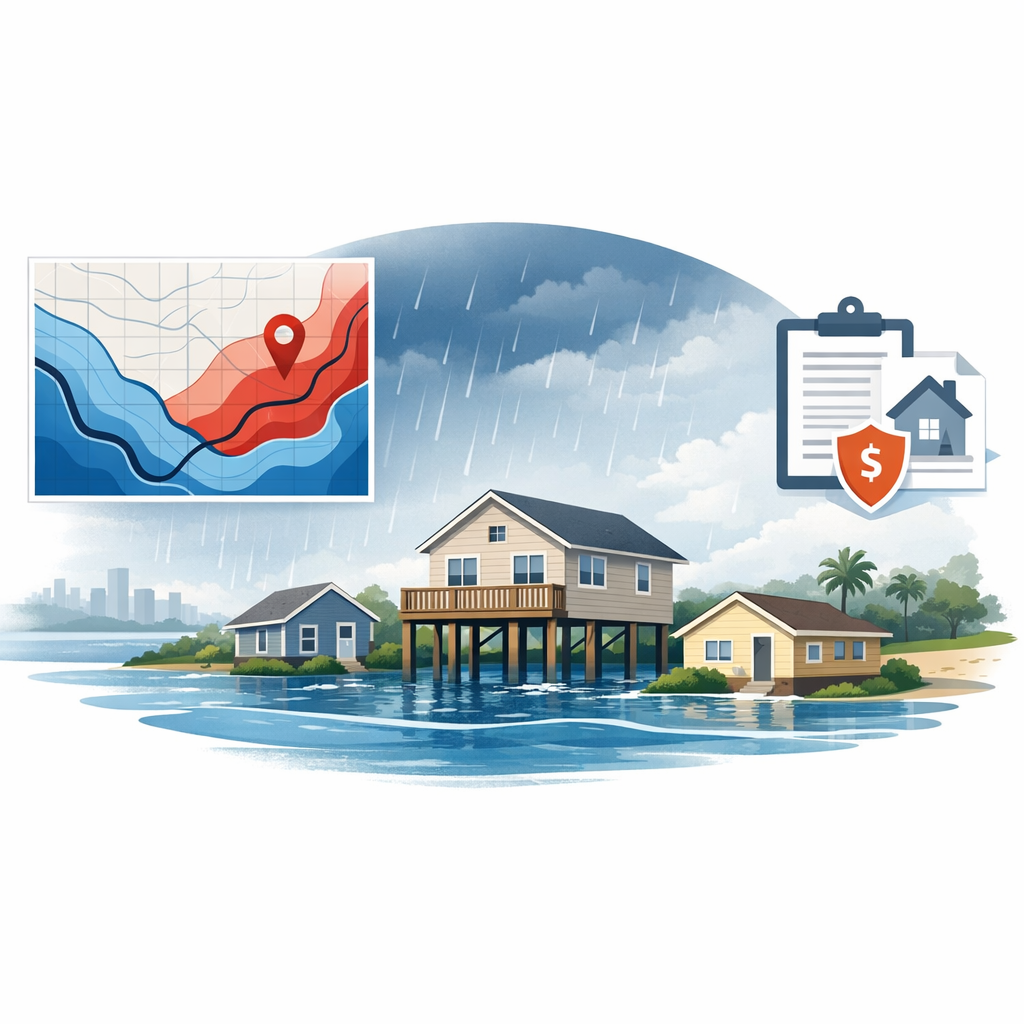
Flood Zone B: The Legacy Moderate-Risk Designation (Now Shaded Zone X)
If you've encountered "Flood Zone B" on a flood map, property document, or real estate listing, you're looking at a legacy designation that FEMA has replaced with Shaded Zone X on all new and updated Flood Insurance Rate Maps.
What Was Flood Zone B?
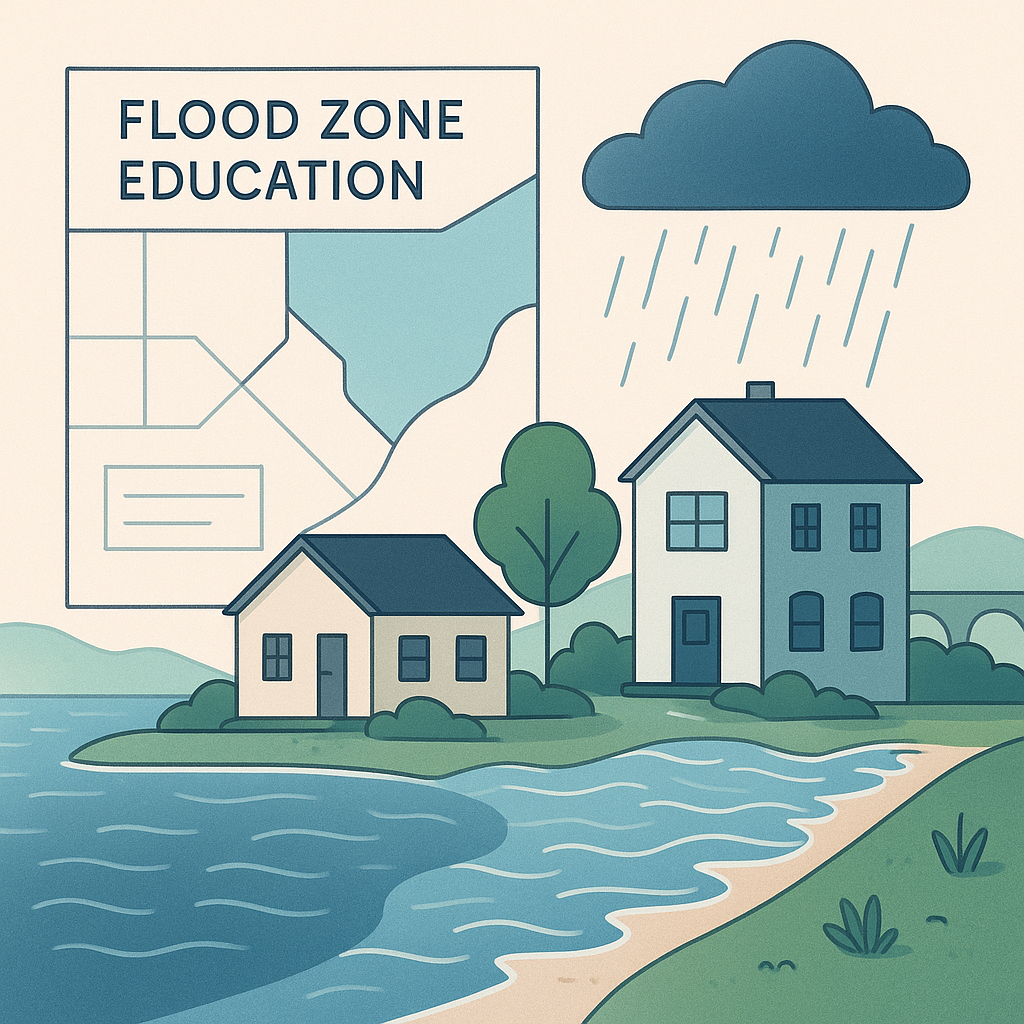
Flood Zone B was FEMA's original designation for areas of moderate flood risk — specifically, areas between the 1% annual chance flood boundary (100-year flood) and the 0.2% annual chance flood boundary (500-year flood).
Key Characteristics
- Risk level: Moderate (0.2% to 1% annual chance of flooding)
- SFHA designation: No — Zone B was never a Special Flood Hazard Area
- Insurance required: No mandatory purchase requirement
- Current equivalent: Shaded Zone X
- Status: Legacy designation — no longer used on new FEMA maps
Why Does Zone B Still Appear?
You may still encounter Zone B in several contexts:
- Older FEMA maps: Communities with FIRMs that haven't been updated may still show Zone B designations
- Historical documents: Older flood determinations, title records, and property documents may reference Zone B
- Property descriptions: MLS listings, property assessments, or insurance records created when Zone B was current
- Casual references: Some professionals still use "Zone B" informally when referring to Shaded Zone X
When you see Zone B on a current flood determination, it means the property is in the moderate-risk area equivalent to Shaded Zone X.
Zone B = Shaded Zone X: What That Means Today
The practical implications of Zone B / Shaded Zone X are identical:
Flood Risk
- 0.2% to 1% annual chance of flooding in any given year
- Over a 30-year mortgage: approximately 6% to 26% chance of experiencing a flood
- Not high enough risk for SFHA designation, but not negligible
Insurance
- Not required for federally backed mortgages
- Available through both NFIP and private insurers
- Affordable — typically $300-800/year for residential properties
- Recommended by FEMA, insurance professionals, and financial advisors
Lending
- Flood determination will show SFHA = NO
- No mandatory flood insurance purchase requirement
- Some lenders may recommend or require flood insurance at their discretion
- Zone B/Shaded Zone X should be noted in the flood certificate comments
Construction
- No special FEMA flood construction requirements
- Local building codes still apply
- Some communities may have their own regulations for the 500-year floodplain
- Good practice: consider elevation and drainage even outside the SFHA
Why Zone B / Shaded Zone X Matters
Despite not triggering the mandatory insurance requirement, Zone B properties have real flood risk:
- Over 25% of NFIP flood claims come from outside the SFHA
- Properties near the SFHA boundary may only be a few inches of elevation away from the high-risk zone
- FEMA map updates can reclassify Zone B areas into the SFHA if new studies show increased risk
- Climate change and development are expanding flood risk in many moderate-risk areas
A Common Scenario
A property sits just outside the SFHA boundary in Zone B. The owner doesn't purchase flood insurance because it's not required. A storm event slightly exceeds the 1% annual chance flood, or localized drainage issues cause flooding that the map doesn't predict. The property floods with 2 feet of water, causing $40,000 in damage. Without flood insurance, the owner bears the full cost.
This scenario plays out thousands of times each year across the country.
If Your Property Is in Zone B
Step 1: Understand It's Shaded Zone X
Don't be confused by the legacy label. Zone B = Shaded Zone X = moderate flood risk.
Step 2: Consider Flood Insurance
At $300-800/year, flood insurance in the moderate-risk zone is one of the most cost-effective insurance purchases you can make. The coverage-to-cost ratio is excellent compared to the potential losses from a flood event.
Step 3: Monitor Map Changes
FEMA regularly updates its maps. A property in Zone B/Shaded Zone X today could be reclassified into the SFHA (Zone AE) in a future map update, triggering mandatory insurance requirements if you have a federally backed mortgage.
Step 4: Prepare
Even without insurance requirements:
- Maintain proper drainage around your property
- Know your evacuation routes
- Keep important documents in waterproof storage
- Consider elevating utilities above potential flood levels
For Professionals Encountering Zone B
If You See Zone B on a Flood Determination
The property is in the moderate-risk area. Treat it as Shaded Zone X for all practical purposes. The determination should still show SFHA = NO.
If a Client Asks About Zone B
Explain that it's a legacy designation equivalent to Shaded Zone X — moderate flood risk, no mandatory insurance, but insurance is recommended. Don't dismiss the risk simply because the property isn't in the SFHA.
If an Older Map Shows Zone B
Recommend checking the current effective FIRM for the area. The zone designation may have changed — the property could now be in Zone AE (SFHA) or Unshaded Zone X, depending on updated studies.
Get Current Flood Zone Data Instantly
Don't rely on outdated Zone B designations. FloodCert.org uses the latest FEMA map data to deliver accurate, current flood zone determinations in seconds.