Flood Zone AH: Shallow Flooding from Ponding Explained
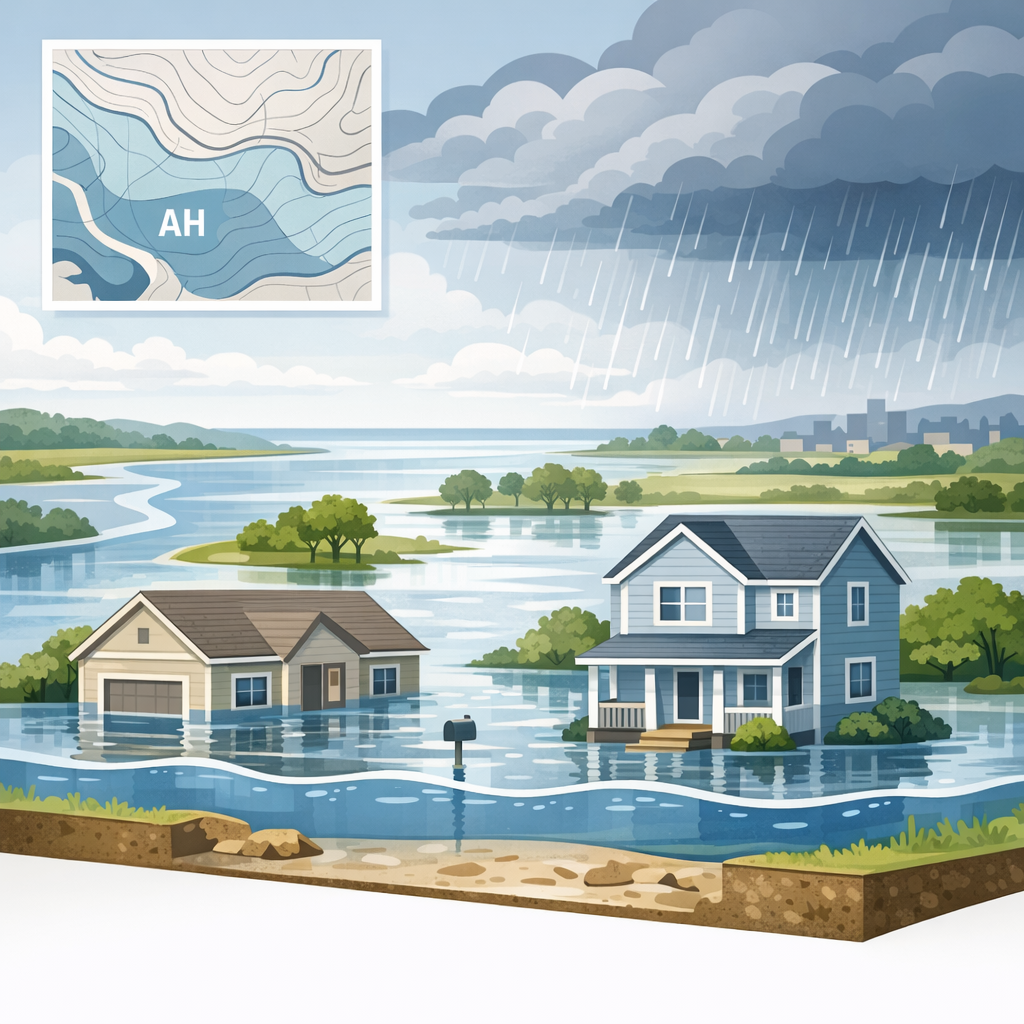
Flood Zone AH is a Special Flood Hazard Area (SFHA) designation for areas subject to shallow flooding in the form of ponding, with flood depths typically between 1 and 3 feet. Like Zone AE, Zone AH includes established Base Flood Elevations (BFEs), but the flooding mechanism is distinctly different.
What Is Flood Zone AH?
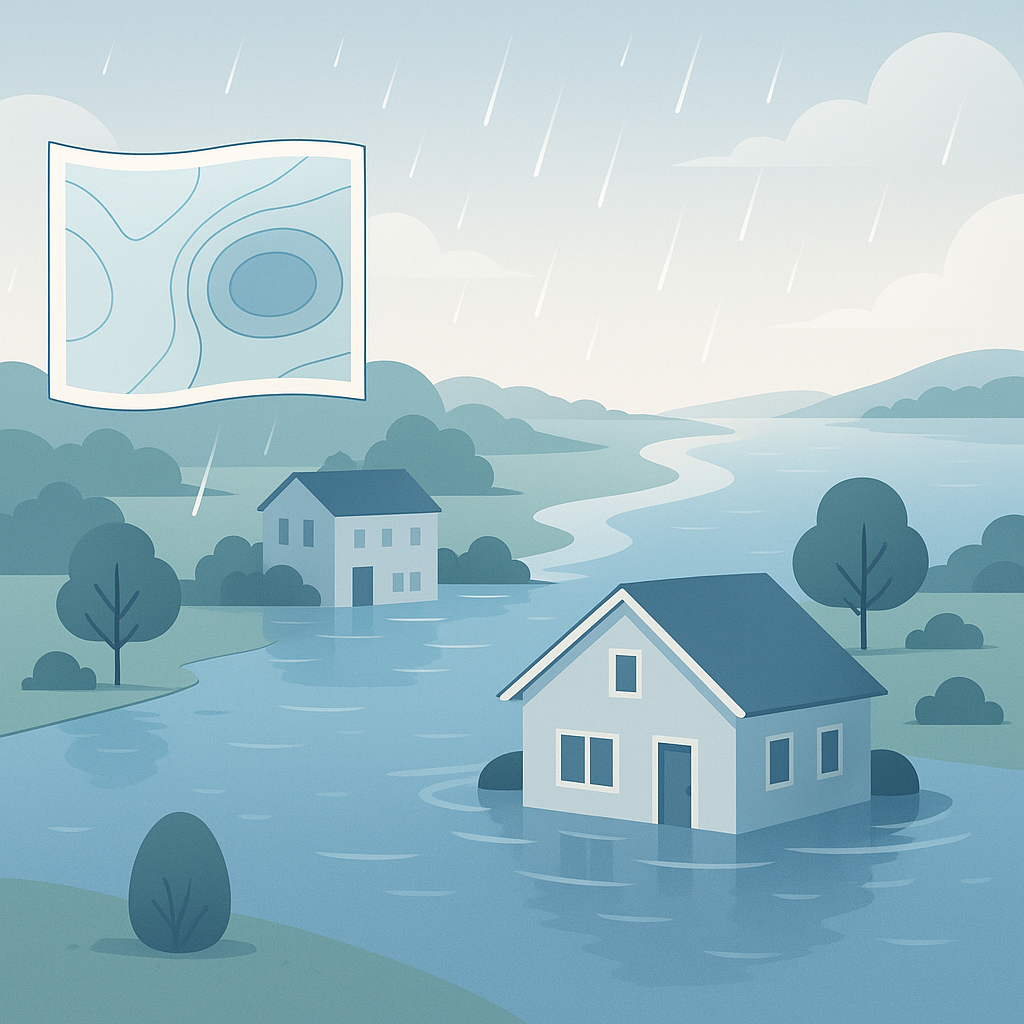
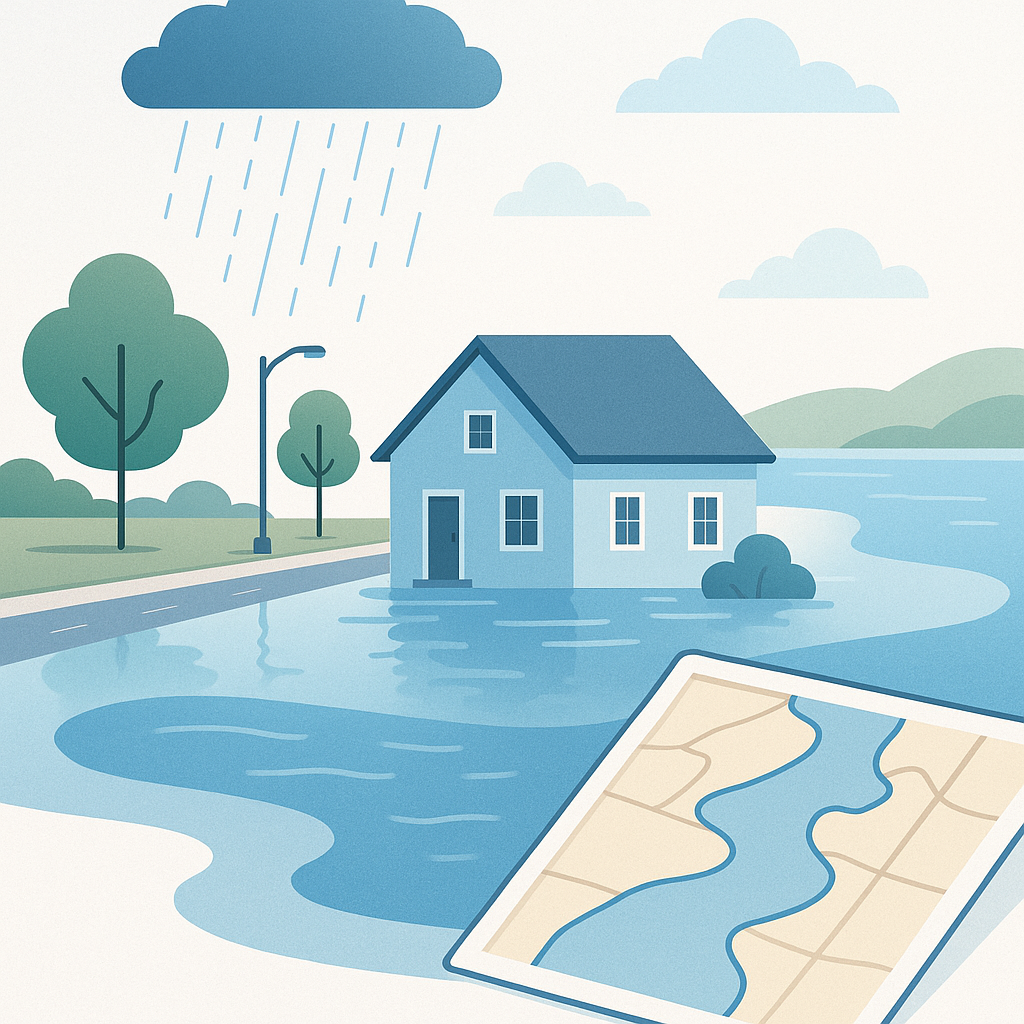
Zone AH identifies areas where flooding occurs as ponding — water that collects in low-lying, flat areas without a defined channel. Unlike riverine flooding (Zone AE), where water overflows from a river or stream, ponding occurs when water accumulates in depressions or behind obstructions and has nowhere to drain.
Key Characteristics
- Flood type: Shallow ponding (standing water)
- Typical depth: 1 to 3 feet
- BFE established: Yes
- Risk level: High (1% annual chance)
- Insurance required: Yes, for federally backed mortgages
- SFHA designation: Yes
Where Zone AH Typically Occurs
- Flat terrain with poor natural drainage
- Behind levees or berms where water pools if it overtops or seeps through
- Urban areas with insufficient storm drainage capacity
- Agricultural flatlands adjacent to rivers and streams
- Coastal plains and low-lying inland areas
How Zone AH Flooding Differs from Other Flood Types
Understanding the flooding mechanism helps property owners prepare appropriately:
| Feature | Zone AE (Riverine) | Zone AH (Ponding) | Zone AO (Sheet Flow) |
|---|---|---|---|
| Water source | River/stream overflow | Accumulation in low areas | Overland flow on slopes |
| Flow velocity | Can be high | Very low (standing water) | Moderate |
| Depth | Varies widely | 1-3 feet typically | 1-3 feet typically |
| Duration | Hours to days | Can last days to weeks | Hours |
| Warning time | Often hours | May develop slowly | Can be rapid |
| BFE provided? | Yes | Yes | No (depths given) |
Ponding floods are often slower to develop but can persist longer than riverine floods. Water sits on the land until it evaporates, infiltrates, or is pumped away. This prolonged exposure can cause:
- Extended water damage to building materials
- Mold and mildew growth
- Foundation settling and soil saturation issues
- Landscape and utility damage
Insurance in Zone AH
Mandatory Purchase
Zone AH is an SFHA, so the mandatory flood insurance requirement applies for all federally backed mortgages — the same as Zone A, AE, V, or VE.
Pricing Considerations
Under Risk Rating 2.0, flood insurance premiums for Zone AH properties are calculated using the same methodology as other zones, with factors including:
- Building elevation relative to BFE
- Distance to flood source
- Building characteristics
- Historical claims
Because Zone AH flooding is typically shallow (1-3 feet), properties elevated even slightly above BFE may see relatively moderate premiums compared to deeper-flooding Zone AE areas. However, don't assume shallow means cheap — a few feet of water can still cause significant damage.
Typical Cost Range
For a residential property in Zone AH:
- At or above BFE: $500 – $1,500/year
- Below BFE: $1,500 – $4,000+/year
Building and Construction Standards
New Construction
The same SFHA construction standards apply in Zone AH as in other A zones:
- Lowest floor must be at or above BFE (plus any local freeboard)
- Flood-resistant materials required below BFE
- Proper anchoring against flotation
- Flood openings in enclosed areas below BFE
Special Considerations for Zone AH
Because ponding involves standing water rather than flowing water, some considerations are unique:
- Drainage is critical: Ensure proper grading directs water away from the structure
- Sump pumps: May be particularly useful in Zone AH where water accumulates slowly
- Foundation waterproofing: Extended water contact makes waterproofing more important than in flash-flood zones
- Landscaping: Proper grading and drainage landscaping can significantly reduce ponding risk around a structure
Property Owner Strategies
1. Elevation Certificate
An EC is essential for understanding your specific exposure. In Zone AH, even a foot of elevation above BFE can make a meaningful difference in both risk and insurance cost.
2. Site Drainage Improvements
Because ponding is fundamentally a drainage problem, site improvements can be highly effective:
- French drains to channel water away
- Improved grading to prevent water accumulation
- Rain gardens and bioswales for water management
- Sump pump systems with battery backup
3. LOMA Application
If your property is naturally above the BFE, a LOMA can remove the mandatory insurance requirement. This may be more achievable in Zone AH than in deep-water Zone AE areas, since the BFE may be only 1-3 feet above the surrounding terrain.
4. Flood-Proofing
For existing structures that can't be easily elevated:
- Apply waterproof coatings to foundation walls
- Install check valves on sewer lines to prevent backflow
- Elevate utilities (HVAC, electrical panels, water heaters) above BFE
- Use flood-resistant building materials for anything at or below BFE
Impact on Real Estate Transactions
Zone AH carries the same transaction implications as any SFHA:
- Flood determination required for mortgage origination
- Borrower notification that the property is in an SFHA
- Insurance must be in place before closing
- Life of loan monitoring recommended to track map changes
However, Zone AH properties may be easier for buyers to accept than deep-water Zone AE properties, since the flooding is shallow and often manageable with proper site preparation.
For Professionals
Lenders
Zone AH triggers identical compliance requirements as Zone AE. Don't treat it differently in your compliance workflow.
Title Companies
Flag Zone AH early — the insurance requirement is the same as AE, and buyers need time to obtain coverage.
Real Estate Agents
Zone AH can be easier to explain to buyers: "This area may get 1-3 feet of standing water in a major storm." Help them understand both the risk and the mitigation options.
Determine Your Flood Zone Instantly
Don't wait to find out if a property is in Zone AH. FloodCert.org delivers certified flood determinations in seconds — complete with zone designation and BFE data.