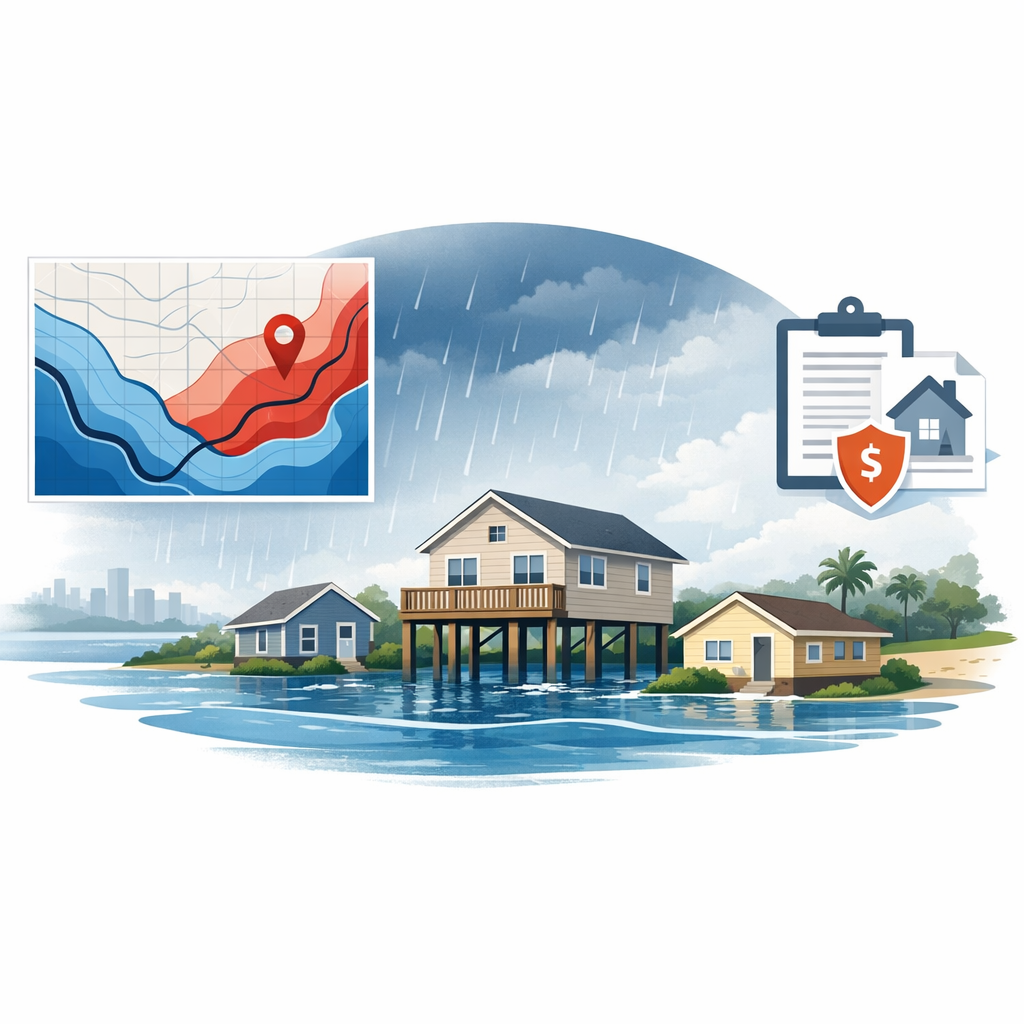
Do I Need Flood Insurance? A Decision Guide for Homeowners and Property Buyers
Flood insurance is one of those costs that can catch buyers off guard at closing. Whether you're purchasing a new home, refinancing, or simply wondering if you're adequately protected, this guide walks you through how to determine whether flood insurance is required, recommended, or entirely optional for your property.

Flood insurance is one of those costs that can catch buyers off

---
The Short Answer
## The Short Answer

It depends on two things:
- Your flood zone — Is the property in a Special Flood Hazard Area (SFHA)?
- Your mortgage — Is the loan federally backed or regulated?
If both answers are "yes," flood insurance is legally required. But even if the answer to either is "no," flood insurance may still be a smart investment.
Let's break it down step by step.
Step 1: Determine Your Flood Zone
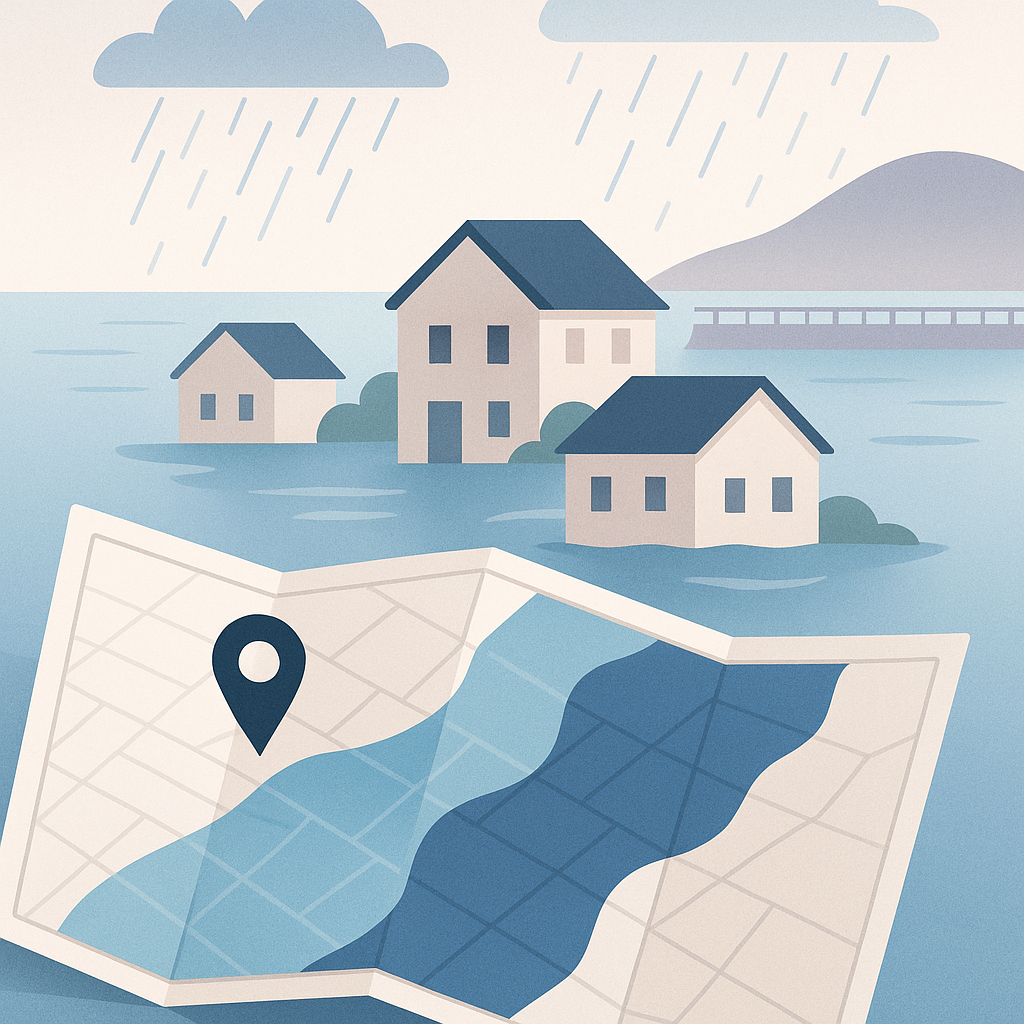
Every property in the United States sits in a FEMA-designated flood zone. The first step is finding out which one applies to your property.
How to Check
- Quick lookup: Visit FEMA's Map Service Center and enter your address
- Official determination: For mortgage purposes, you need a certified flood determination (also called a flood certificate) from an authorized provider like FloodCert.org
- Check your closing documents: If you've already purchased the property, your flood determination should be in your closing package
Understanding the Result
Your property will fall into one of these categories:
High-Risk (SFHA) — Zones A, AE, AH, AO, V, VE:
- 1% or greater annual chance of flooding
- Flood insurance is mandatory with a federally backed mortgage
- These zones are collectively called Special Flood Hazard Areas
Moderate Risk — Zone X (shaded), formerly Zone B:
- Between 0.2% and 1% annual chance of flooding
- Flood insurance is not required but strongly recommended
- These properties still flood — they're just statistically less likely to in any given year
Low Risk — Zone X (unshaded), formerly Zone C:
- Less than 0.2% annual chance of flooding
- Flood insurance is not required but available
- Over 25% of NFIP claims come from these zones
Undetermined — Zone D:
- Flood risk exists but hasn't been formally studied
- Lenders may still require flood insurance based on their own risk assessment
- Flood insurance is available and often advisable
Step 2: Check Your Mortgage Type
The mandatory purchase requirement applies when a property is in an SFHA and the loan is made, guaranteed, or insured by a federal agency or federally regulated lender.

Loans That Trigger the Requirement
- Conventional mortgages from banks, credit unions, and savings associations regulated by federal agencies (OCC, FDIC, Federal Reserve, NCUA)
- FHA loans insured by the Federal Housing Administration
- VA loans guaranteed by the Department of Veterans Affairs
- USDA loans from the U.S. Department of Agriculture
- Fannie Mae and Freddie Mac purchased or securitized loans
- SBA loans from the Small Business Administration
Loans That May NOT Trigger the Requirement
- Seller-financed mortgages (no federal involvement)
- Loans from non-federally-regulated private lenders
- Cash purchases (no mortgage at all)
However, even if flood insurance isn't technically required, most financial advisors strongly recommend it for properties in or near SFHAs.
Step 3: Understand What "Required" Really Means
When flood insurance is mandatory, here's what that looks like in practice:
At Closing
- The lender orders a flood determination (flood certificate)
- If the property is in an SFHA, the borrower is notified in writing
- The borrower must obtain a flood insurance policy before closing
- Coverage must be at least the lesser of:
- The outstanding principal balance of the loan
- The maximum available NFIP coverage ($250,000 for residential buildings)
- The insurable value of the building
After Closing
- The flood insurance policy must be maintained for the life of the loan
- If the borrower lets the policy lapse, the lender will force-place coverage and charge the cost to the borrower (force-placed policies are typically much more expensive)
- If FEMA map changes place a previously low-risk property into an SFHA, the lender must notify the borrower and require insurance
When Flood Insurance Isn't Required But IS Recommended
Just because flood insurance isn't legally mandated doesn't mean you don't need it. Consider these scenarios:
You're in Zone X (Shaded) — Moderate Risk
Properties in shaded Zone X have a measurable flood risk. According to FEMA, these areas have a 0.2% to 1% annual chance of flooding. Over a 30-year mortgage, that translates to a 6% to 26% chance of experiencing a flood.
The good news? Because insurance isn't mandatory, policies in these zones are often significantly cheaper — sometimes as low as $300-600 per year through NFIP's Preferred Risk Policy or private insurers.
You're in Zone X (Unshaded) — But Near a Flood Source
If your property is technically in a low-risk zone but sits near a river, creek, coast, or drainage area, you face real flood risk that the maps may not fully capture. FEMA maps are based on models with known limitations:
- Maps may be outdated (some are based on studies from the 1970s or 1980s)
- They don't account for all localized drainage issues
- Urban development upstream can increase runoff and flooding downstream
- Climate change is altering precipitation patterns
You're in Any Zone and Have a Basement
Standard homeowners insurance policies do not cover flood damage. If you have a finished basement with valuable belongings, a flood event could result in devastating financial losses without flood insurance.
You Live in a Flood-Prone Region
Even if your specific parcel is in Zone X, regional flood events don't respect zone boundaries. Hurricanes, atmospheric rivers, and extreme rainfall events can overwhelm drainage systems and flood areas that aren't mapped as high-risk.
The Cost of Going Without
Consider the financial math:
Average Flood Claim
According to FEMA, the average residential flood claim is approximately $52,000. Even a few inches of water in a home can cause $25,000 or more in damage — warped flooring, destroyed drywall, damaged electrical systems, mold remediation, and ruined personal property.
Federal Disaster Assistance Is Not a Substitute
Many people assume that if a flood occurs, the federal government will bail them out. The reality is quite different:
- Federal disaster assistance is only available when the President declares a federal disaster — and not all floods qualify
- The average FEMA disaster assistance grant is approximately $5,000 — far less than the cost of most flood damage
- SBA disaster loans (the most common form of federal flood assistance) must be repaid with interest
- Having flood insurance actually increases the total assistance available to you
The Math
| Scenario | Cost |
|---|---|
| Flood insurance in Zone X (annual) | $300 – $800 |
| Flood insurance in Zone AE (annual) | $700 – $3,000+ |
| Average flood damage (no insurance) | $52,000 |
| FEMA disaster grant (average) | $5,000 |
| Gap without insurance | $47,000 |
How to Purchase Flood Insurance
Option 1: National Flood Insurance Program (NFIP)
The NFIP is administered by FEMA and offers flood insurance through a network of participating insurers and agents. Key features:
- Available in most communities that participate in the NFIP (over 22,000 communities)
- Standard coverage: up to $250,000 building / $100,000 contents (residential)
- 30-day waiting period for new policies (with exceptions for closing-related purchases)
- Rates are now set using Risk Rating 2.0 methodology
Option 2: Private Flood Insurance
The private flood insurance market has grown significantly in recent years. Private insurers may offer:
- Higher coverage limits than NFIP
- Additional coverages (loss of use, additional living expenses)
- Potentially lower premiums, especially for elevated properties
- Shorter or no waiting periods
Federal law requires lenders to accept private flood insurance policies that meet certain criteria, making this a viable alternative for mandatory purchase situations.
Tips for Getting the Best Rate
-
Get an Elevation Certificate — Your property's elevation relative to the BFE is a primary rate driver. An EC costs $300-600 but can save thousands in premiums if your property is well above BFE.
-
Compare NFIP and private — Don't just accept the first quote. Compare NFIP pricing with 2-3 private insurers.
-
Consider higher deductibles — As with other insurance, a higher deductible lowers your premium. Just ensure you can cover the deductible if needed.
-
Check for community discounts — Communities participating in FEMA's Community Rating System (CRS) earn discounts on NFIP premiums of 5% to 45%.
-
Look into a LOMA — If your property is naturally above BFE, a Letter of Map Amendment can remove the mandatory insurance requirement and potentially lower voluntary premiums significantly.
Special Situations
Condominiums
Condo owners in SFHAs should verify that the condo association maintains a Residential Condominium Building Association Policy (RCBAP) covering the building. Individual unit owners may also want a separate contents policy.
Rental Properties
If you own rental property in an SFHA with a federally backed mortgage, flood insurance is required on the building. Tenants are responsible for their own contents coverage.
Second Homes and Vacation Properties
The same rules apply — if the property is in an SFHA and has a federally backed mortgage, flood insurance is mandatory regardless of whether it's a primary residence.
Commercial Properties
The mandatory purchase requirement applies to commercial properties in SFHAs as well, with NFIP limits of $500,000 for both building and contents.
Making Your Decision: A Quick Flowchart
- Is the property in an SFHA (Zone A or V)?
- Yes → Flood insurance is required if you have a federally backed mortgage. Stop here.
-
No → Continue to step 2.
-
Is the property in Zone X (shaded) or Zone D?
- Yes → Flood insurance is strongly recommended. Policies are affordable in these zones.
-
No → Continue to step 3.
-
Is the property near any water source, in a flood-prone region, or does it have a basement?
- Yes → Flood insurance is recommended. The cost is minimal compared to potential losses.
- No → Flood insurance is optional but still worth considering. Over 25% of claims come from low-risk zones.
Know Your Flood Zone Instantly with FloodCert.org
The first step to answering "Do I need flood insurance?" is knowing your flood zone. FloodCert.org delivers certified flood zone determinations in seconds — no waiting, no guessing.
Whether you're a homeowner checking your own property or a lender processing hundreds of loans, FloodCert.org gives you the answers you need, when you need them.