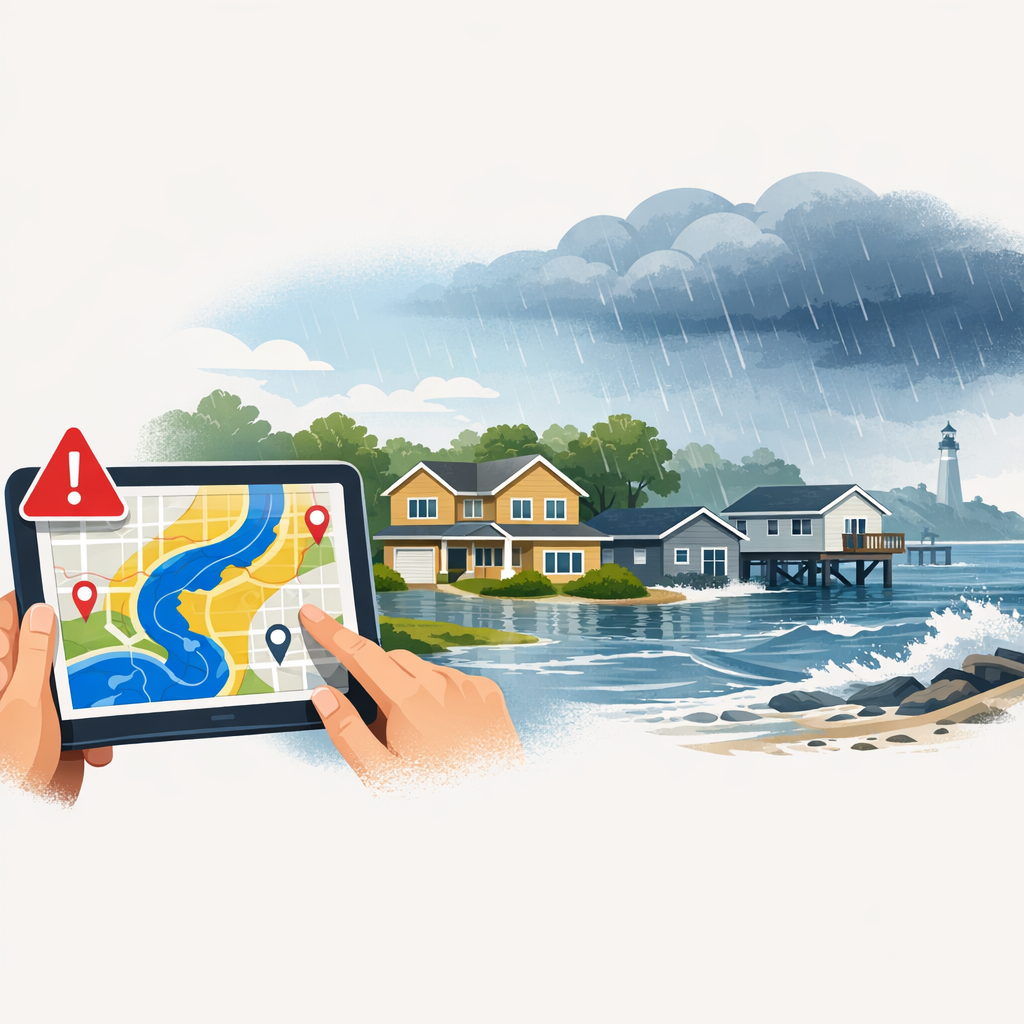
Hurricane Season Preparation Guide
Atlantic hurricane season runs from June 1 through November 30 every year. For mortgage lenders, title companies, and real estate professionals, that six-month window brings unique risks: closing delays, insurance complications, property damage, and portfolio exposure.
The professionals who prepare before the season starts are the ones who navigate it smoothly. This guide covers what you need to do — for your business, your pipeline, and your clients — before the first storm forms.
Why Hurricane Season Matters for Real Estate Professionals
Hurricanes aren't just a homeowner problem. They create cascading effects across the entire real estate transaction ecosystem:

- Closings get delayed or canceled when properties are damaged or inaccessible
- Flood insurance becomes harder to obtain during active storm events (most carriers impose binding restrictions when a named storm is in the Gulf or approaching the coast)
- Appraisals and inspections can't be completed during and after storms
- Title searches may be complicated by post-storm liens, code enforcement actions, or emergency ordinances
- Servicing portfolios face concentrated damage exposure
- Property values can shift rapidly in storm-affected areas
Preparation isn't about predicting which storms will hit. It's about having systems, processes, and plans in place so that when they do, your business keeps moving.
Pre-Season Checklist: May Preparations
The best time to prepare for hurricane season is May — before the June 1 start date. Here's what to tackle:

1. Review Your Flood Insurance Pipeline
For lenders:
- Identify all in-process loans for properties in SFHAs or coastal areas
- Ensure flood insurance is ordered early in the process — don't leave it as a last-minute closing condition
- Verify that insurance agents and carriers used by your borrowers are responsive and reliable
Why it matters: When a named storm enters the Gulf of Mexico or approaches the Atlantic coast, most flood insurance carriers stop binding new policies until the threat passes. This "binding moratorium" can last 3-7 days or longer. If your borrower hasn't secured flood insurance before the moratorium kicks in, the closing is delayed — potentially by weeks.
Pro tip: For loans in coastal areas during hurricane season, push for flood insurance binding within the first week of processing, not at the end.
2. Audit Your Servicing Portfolio
For lenders and servicers:
- Run a geographic analysis of your portfolio to identify concentration areas in hurricane-prone regions
- Verify that all SFHA properties have current, active flood insurance policies
- Check for policies approaching renewal — a lapsed policy during hurricane season is a compliance violation and a financial risk
- Confirm that your life-of-loan monitoring is current (FloodCert.org's monitoring service automates this)
3. Update Your Flood Determinations
Map changes don't stop for hurricane season. Ensure all flood determinations in your pipeline and portfolio are based on the current effective FIRM.
FloodCert.org makes this simple: Pull instant flood certs for any property in question. If a map change has occurred since the last determination, you'll know immediately.
4. Brief Your Team
Hold a pre-season briefing covering:
- Binding moratorium procedures — what to do when carriers stop writing new policies
- Storm-related closing delay protocols — how to communicate with borrowers, agents, and attorneys
- Post-storm inspection requirements — when and how to verify property condition before closing
- Business continuity plans — remote work capabilities, backup communication channels, data access during power outages
5. Communicate with Clients
Send a pre-season advisory to your lender clients, real estate agent partners, and borrowers in coastal/flood-prone areas:
- Remind them of the June 1 start date
- Encourage early flood insurance binding
- Explain the possibility of binding moratoriums and closing delays
- Provide your storm-season contact information and procedures
Being proactive positions you as a knowledgeable, prepared partner — not someone scrambling when the storm hits.
During the Season: When a Storm Approaches
Binding Moratoriums: What You Need to Know

When the National Hurricane Center issues a Tropical Storm Watch or Warning for a coastal area, flood insurance carriers typically impose a binding moratorium for that region. Here's how it works:
What's restricted: New flood insurance policies cannot be bound for properties in the affected area. Existing policies are not affected.
Geographic scope: The moratorium applies to counties or zones under the watch/warning. It may extend beyond the immediate threat area.
Duration: The moratorium begins when the watch/warning is issued and typically lasts until 48-72 hours after the storm passes the area. In severe cases, it can extend longer.
Impact on closings: If a borrower hasn't bound their flood insurance policy before the moratorium, the closing cannot proceed (for loans requiring flood insurance). There is no workaround — the insurance must be in place.
What you can do:
- Monitor the National Hurricane Center (nhc.noaa.gov) for tropical weather outlooks
- When a system forms or approaches, immediately contact all borrowers in the affected area who haven't yet bound flood insurance
- Communicate potential delays to all parties — real estate agents, attorneys, borrowers
- Document the moratorium as the cause of delay for rate lock extension requests
Active Storm Protocols
When a hurricane or tropical storm is actively affecting your market:
Communication is everything. Set up a regular cadence of updates to borrowers, agents, and partners. Even a simple "no update yet, we're monitoring the situation" is better than silence.
Pause appraisals and inspections in affected areas until it's safe to conduct them and any flood damage can be accurately assessed.
Document everything. When a storm causes delays, document the timeline: when the moratorium started, when it lifted, when normal operations resumed. This documentation supports rate lock extension requests and regulatory compliance.
Check on your people first. Before worrying about loan files, make sure your team members in affected areas are safe. Business continuity matters, but people come first.
After the Storm: Recovery and Assessment
Post-Storm Property Inspections
For loans in process (not yet closed), most lenders require a post-storm property inspection to verify the property hasn't been damaged. This applies to any property in the storm's impact zone, regardless of flood zone designation.
Timing: Inspections typically can't be conducted until:
- Roads are passable and safe
- Utilities are at least partially restored
- The property is accessible
This can take days to weeks depending on storm severity.
What inspectors look for:
- Structural damage (roof, walls, foundation)
- Flood damage (water lines, debris, mold)
- Utility damage (electrical, plumbing, HVAC)
- Access issues (downed trees, road damage)
- General habitability
If damage is found: The closing is typically delayed until repairs are completed and re-inspected. Depending on damage severity, the loan may need to be restructured, the appraisal updated, or in extreme cases, the transaction may be canceled.
Portfolio Monitoring Post-Storm
For servicers: After a major storm, proactively assess your portfolio:
- Identify exposed properties using geographic data and storm path information
- Verify insurance coverage is active for all affected properties
- Initiate loss inspections for properties in the impact zone
- Track claims activity and coordinate with insurance carriers
- Monitor for force-placed insurance needs if coverage has lapsed
FloodCert.org's portfolio tools help you quickly identify which properties in your servicing book fall within a storm's impact zone, enabling faster response.
FEMA Map Changes After Major Storms
Major hurricanes can alter the landscape in ways that trigger FEMA map changes:
- New flooding data from the storm may expand flood zones
- Erosion and storm surge can change coastal flood zone boundaries
- Infrastructure damage (failed levees, destroyed seawalls) can eliminate previously recognized flood protection
These map changes may not happen immediately — they often take 12-24 months after a major event — but they're worth monitoring, especially if you have significant portfolio concentration in the affected area.
Insurance Considerations for Hurricane Season
Pre-Season Insurance Review
Encourage clients to review their flood insurance policies before hurricane season:
- Coverage amounts: Are they adequate? Under Risk Rating 2.0, rebuilding costs may exceed previous estimates.
- Deductibles: Higher deductibles reduce premiums but increase out-of-pocket costs after a loss. Is the deductible appropriate for the client's financial situation?
- Contents coverage: Building coverage is separate from contents. Many policyholders underinsure their contents.
- Policy effective date: NFIP policies have a 30-day waiting period from purchase to effective date. A policy bought on May 31 isn't effective until June 30 — well into hurricane season. Buy early.
The 30-Day Waiting Period: A Critical Detail
The NFIP's 30-day waiting period catches people every year. Here's how it affects different scenarios:
New home purchase: The waiting period is waived when flood insurance is required in connection with a mortgage loan. The policy is effective at closing.
Voluntary purchase: If a homeowner in Zone X decides to buy flood insurance voluntarily, there's a 30-day wait. Buying insurance after a storm is forecast doesn't help — the waiting period means it won't be effective in time.
Policy renewal: No waiting period for renewals, as long as there's no lapse in coverage.
Takeaway: Anyone who might want flood insurance during hurricane season should purchase it by May 1 at the latest to ensure coverage is in effect by June 1.
Private Flood Insurance Options
Private flood insurers may have different rules regarding:
- Binding moratoriums — some private carriers impose them, others don't (or impose them for shorter periods)
- Waiting periods — private policies may have shorter or no waiting periods
- Coverage terms — private policies may offer broader coverage, higher limits, or replacement cost coverage not available through the NFIP
For borrowers in flood-prone areas, exploring private flood insurance options before hurricane season provides more flexibility and potentially better coverage.
Business Continuity Planning
Technology Preparedness
- Cloud-based systems ensure access to files and data even if your physical office is affected
- VPN and remote access capabilities allow your team to work from anywhere
- Backup communication channels — if your phone system goes down, can you reach clients and partners via mobile, email, or messaging?
- Data backups — ensure all critical data is backed up to locations outside the hurricane-prone area
Staffing Plans
- Cross-train team members so that no single person is a bottleneck for critical functions
- Identify remote work locations for team members who may be evacuated
- Establish check-in procedures — how will you confirm staff safety after a storm?
- Plan for reduced capacity — some team members may be dealing with personal property damage or displacement
Client Communication Templates
Prepare these templates before the season starts:
- Pre-season advisory — sent in May, outlining your storm procedures
- Storm approaching notification — sent when a named storm threatens your market
- Binding moratorium alert — sent when carriers restrict new policies
- Post-storm status update — sent after the storm passes with current status and next steps
- Return to normal operations — sent when full operations resume
Having these ready means you communicate quickly and professionally when time is short.
Month-by-Month Hurricane Season Calendar
June
- Season officially starts June 1
- Historically lower activity — but early-season storms do occur
- Complete any remaining preparation tasks
- Verify all portfolio flood insurance policies are active
July–August
- Activity begins increasing
- Peak formation zone shifts into the tropical Atlantic
- Monitor tropical weather weekly
- Ensure all pipeline loans in coastal areas have flood insurance bound
September
- Peak of hurricane season — historically the most active month
- Highest likelihood of major (Category 3+) hurricanes
- Maintain heightened awareness and rapid response capability
- Pre-position post-storm inspection resources if a system approaches
October
- Activity remains elevated, particularly in the Gulf and western Caribbean
- Late-season storms can be unpredictable in track and intensity
- Don't let your guard down
November
- Activity tapers off but doesn't stop until November 30
- Begin post-season review: what worked, what didn't, what to improve for next year
Your Hurricane Season Action Plan
Here's the condensed version — a checklist you can implement today:
- [ ] Audit pipeline for SFHA properties without flood insurance bound
- [ ] Verify servicing portfolio flood insurance compliance
- [ ] Pull current flood determinations for questionable properties via FloodCert.org
- [ ] Brief team on storm protocols and binding moratoriums
- [ ] Prepare client communication templates
- [ ] Test business continuity systems (remote access, backups, communication)
- [ ] Send pre-season advisory to clients and partners
- [ ] Bookmark the National Hurricane Center: nhc.noaa.gov
- [ ] Set up FloodCert.org portfolio monitoring for storm impact analysis
Be Ready Before the Radar Lights Up
Hurricane season comes every year, without exception. The storms may or may not affect your market, but the preparation affects your business regardless — it makes you faster, more organized, and more valuable to your clients.
FloodCert.org helps you stay hurricane-ready year-round with instant flood zone determinations, portfolio monitoring, and automated map change alerts. When a storm threatens, you'll know exactly which properties are at risk and whether their flood certifications and insurance are current.
Visit FloodCert.org to set up your hurricane season monitoring and get instant flood certs for your pipeline. Preparation takes minutes. Recovery takes months. Choose preparation.
FloodCert.org provides instant FEMA flood zone determinations, portfolio monitoring, and compliance tools for mortgage lenders, title companies, and real estate professionals. Get started at floodcert.org.